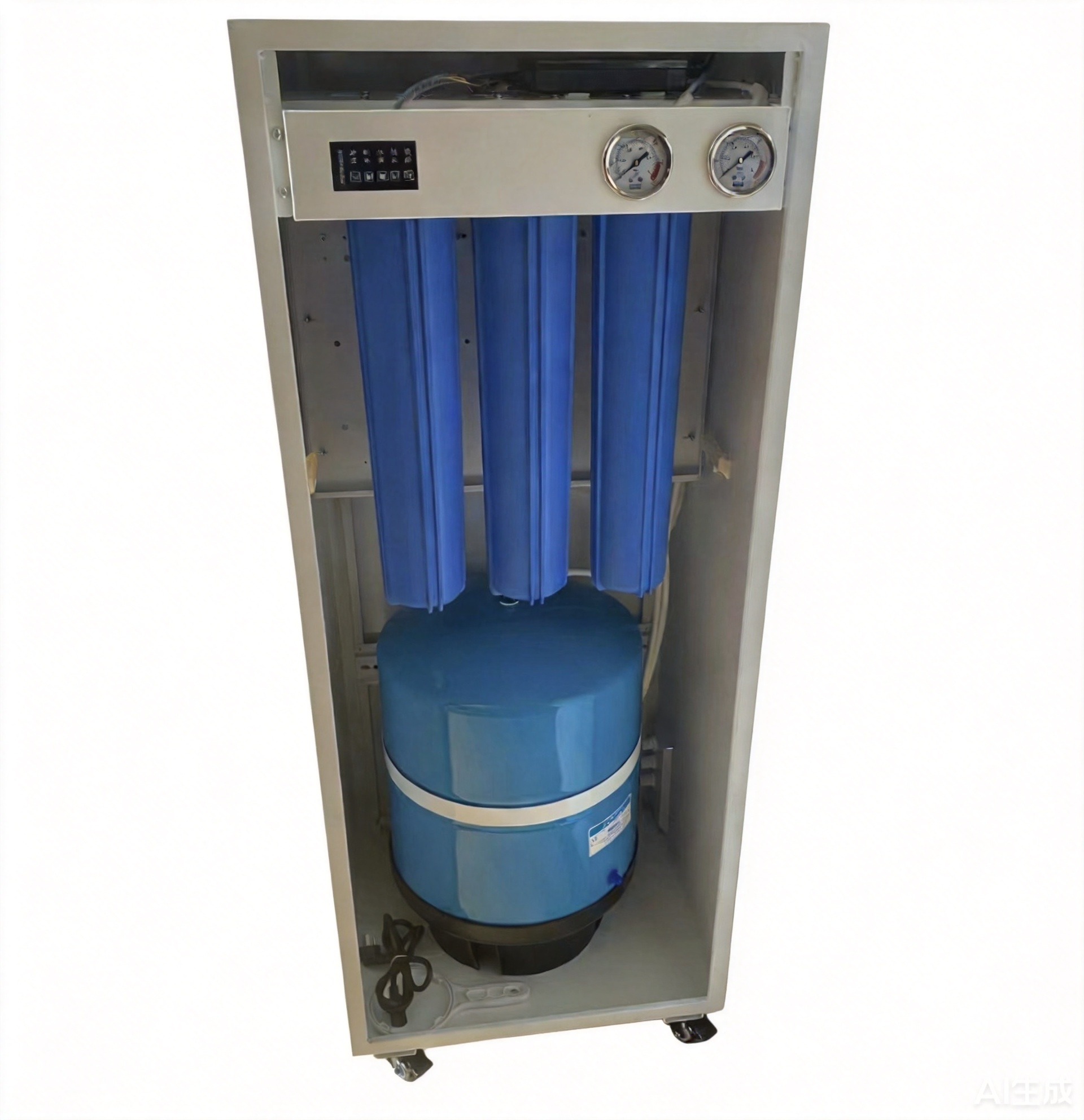
Commercial water purifier RO system water filter wholesale
Commercial Water Purifier (600–2400G) — Filtration Principle and Functions
Product Overview
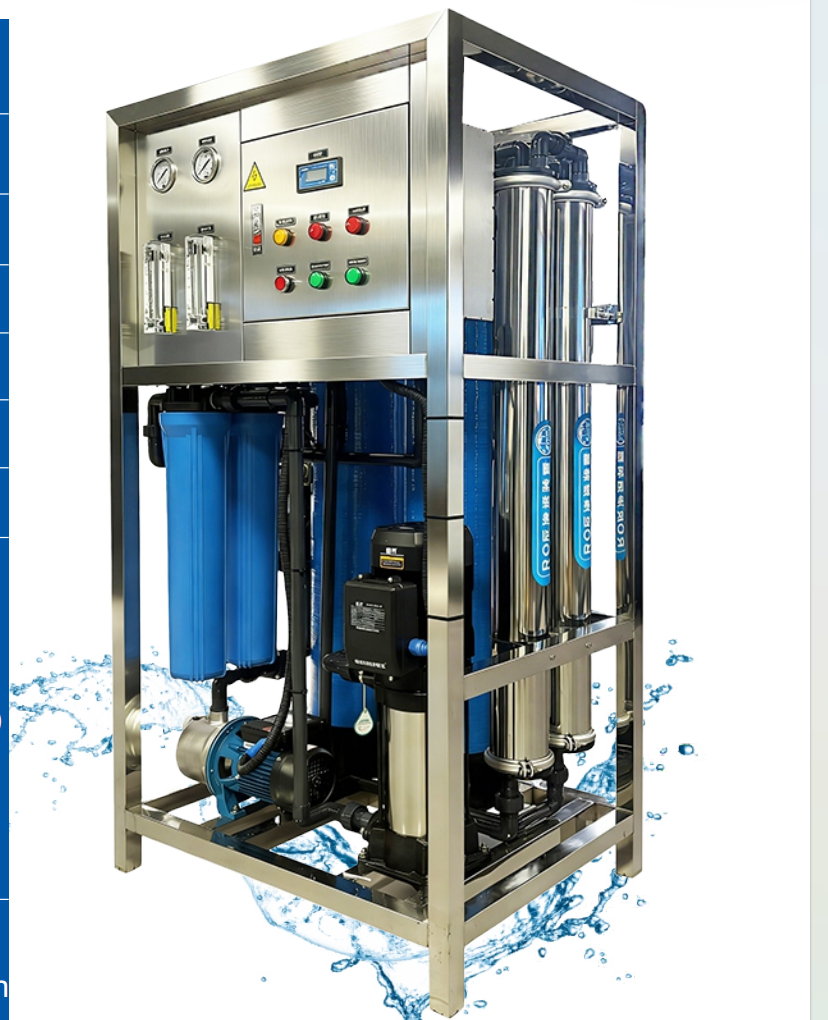
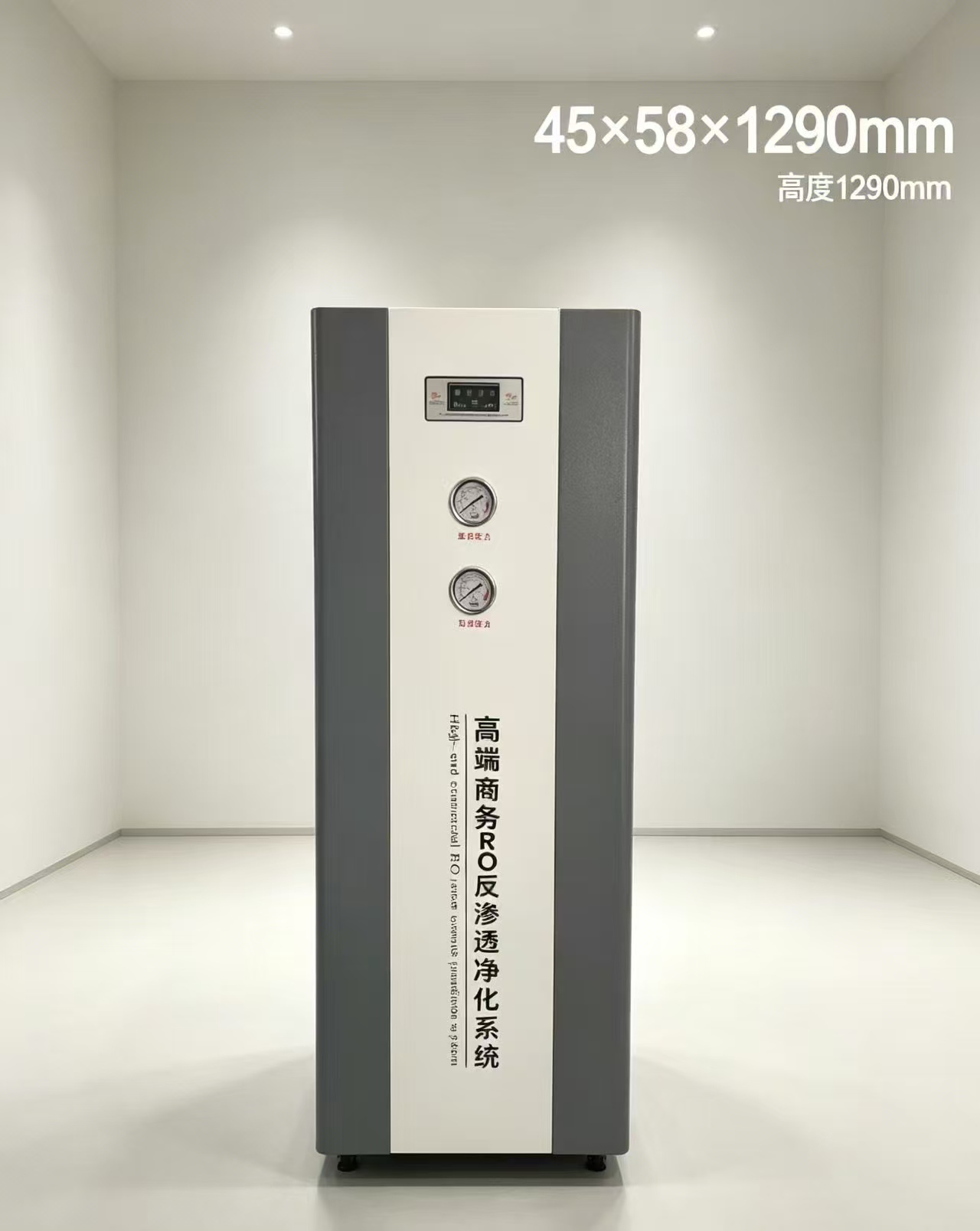
The 600–2400G series refers to small commercial water purifiers with a daily water production capacity ranging from 600 to 2,400 Gallons Per Day (GPD) (approximately 2.2 to 9 cubic meters per day). Designed to bridge the gap between household units and large industrial systems, these purifiers are built for continuous, high-volume operation, making them ideal for restaurants, cafes, offices, clinics, schools, and small hotels.
Filtration Principle (Typical 4-Stage or 5-Stage Process)
The system utilizes a multi-stage, high-pressure Reverse Osmosis (RO) process to ensure high-quality water:
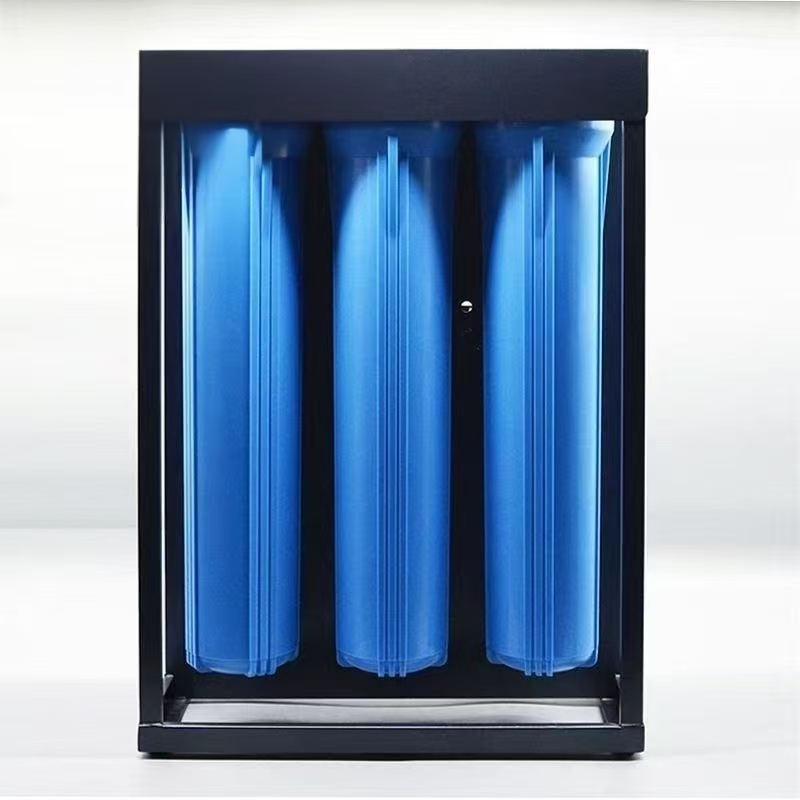
1. Stage 1: PP Sediment Filter (5 Micron)
◦ Principle: Mechanical depth filtration.
◦ Function: Intercepts large particles such as sand, silt, rust, and suspended solids from the municipal water supply, protecting the downstream components and pump.
2. Stage 2: Carbon Block Filter (or Granular Activated Carbon)
◦ Principle: Adsorption.
◦ Function: Removes residual chlorine, organic chemicals, color, and odors. This is crucial because chlorine will rapidly degrade the polyamide RO membrane.
3. Stage 3: RO Membrane (The Core Stage)
◦ Principle: High-pressure reverse osmosis through a semi-permeable TFC (Thin-Film Composite) membrane.
◦ Function: Driven by a high-pressure booster pump (essential for high-flow commercial units), the water is forced through the membrane. It rejects up to 95%–99% of dissolved salts, heavy metals (lead, arsenic), bacteria, viruses, and microplastics. (Note: 600G–2400G systems often use multiple 400G or 800G RO membrane elements running in parallel to achieve the high flow rate).
4. Stage 4: Post-Carbon Filter (T33)
◦ Principle: Polishing adsorption.
◦ Function: Improves the taste of the pure water and ensures it is fresh and sweet before dispensing.
5. Stage 5 (Optional): UV Sterilizer
◦ Principle: Ultraviolet disinfection.