
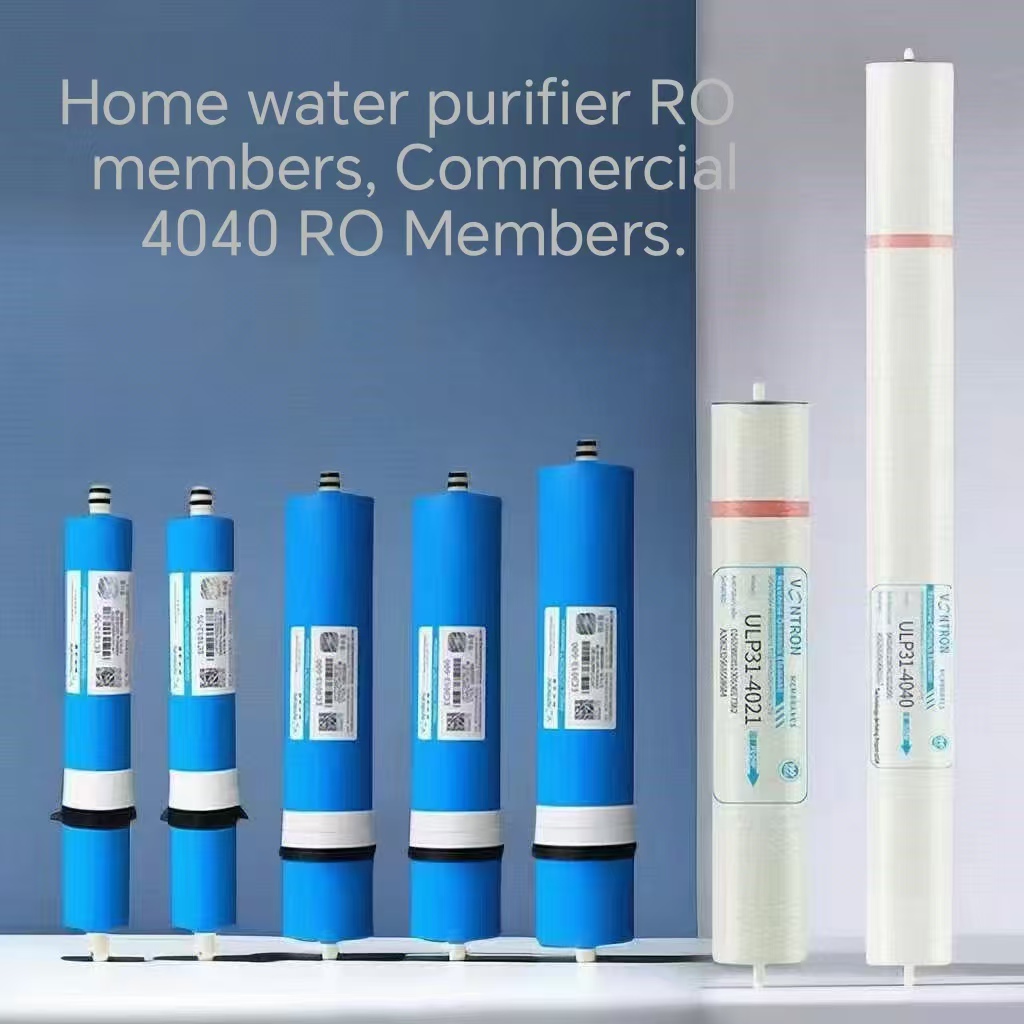
ULP21-4040 RO Membrane, ULP31-4040 RO Members wholesale
ULP31-4040 RO Membrane — Function and Role
The ULP31-4040 is an Ultra-Low Pressure (ULP) aromatic polyamide composite reverse osmosis element, designed primarily for the desalination of brackish water, surface water, and groundwater with a TDS of approximately 2,000 ppm or lower. Its defining feature is that it operates at roughly two-thirds the feed pressure of conventional low-pressure RO membranes, while still maintaining a high rejection rate—typically 99.3% to 99.6% stable salt rejection.
Core Separation Function
The membrane acts as the final desalination barrier in an RO system. Driven by a high-pressure pump, water is forced against the semi-permeable polyamide layer. Water molecules pass through, while dissolved salts, ionic species, and larger organic molecules are rejected. Because it combines low operating pressure with high rejection, the ULP31-4040 removes dissolved salts, TOC (Total Organic Carbon), and silica (SiO₂) effectively—making it particularly suitable for feed waters where organic and colloidal fouling control is important.
Key Performance Profile
Under standard test conditions (1,500 ppm NaCl, 150 psi / 1.05 MPa, 25°C, 15% recovery), the element delivers an average permeate flow of approximately 1,900–2,000 GPD (7.2–7.6 m³/d) with an active membrane area of 89–100 ft² (8.3–9.3 m²) depending on the manufacturer’s specification. The element uses a 28–29 mil feed spacer, which helps manage pressure drop and fouling risk across the membrane surface.


